MAKE A RESERVATION

 Blog
Blog 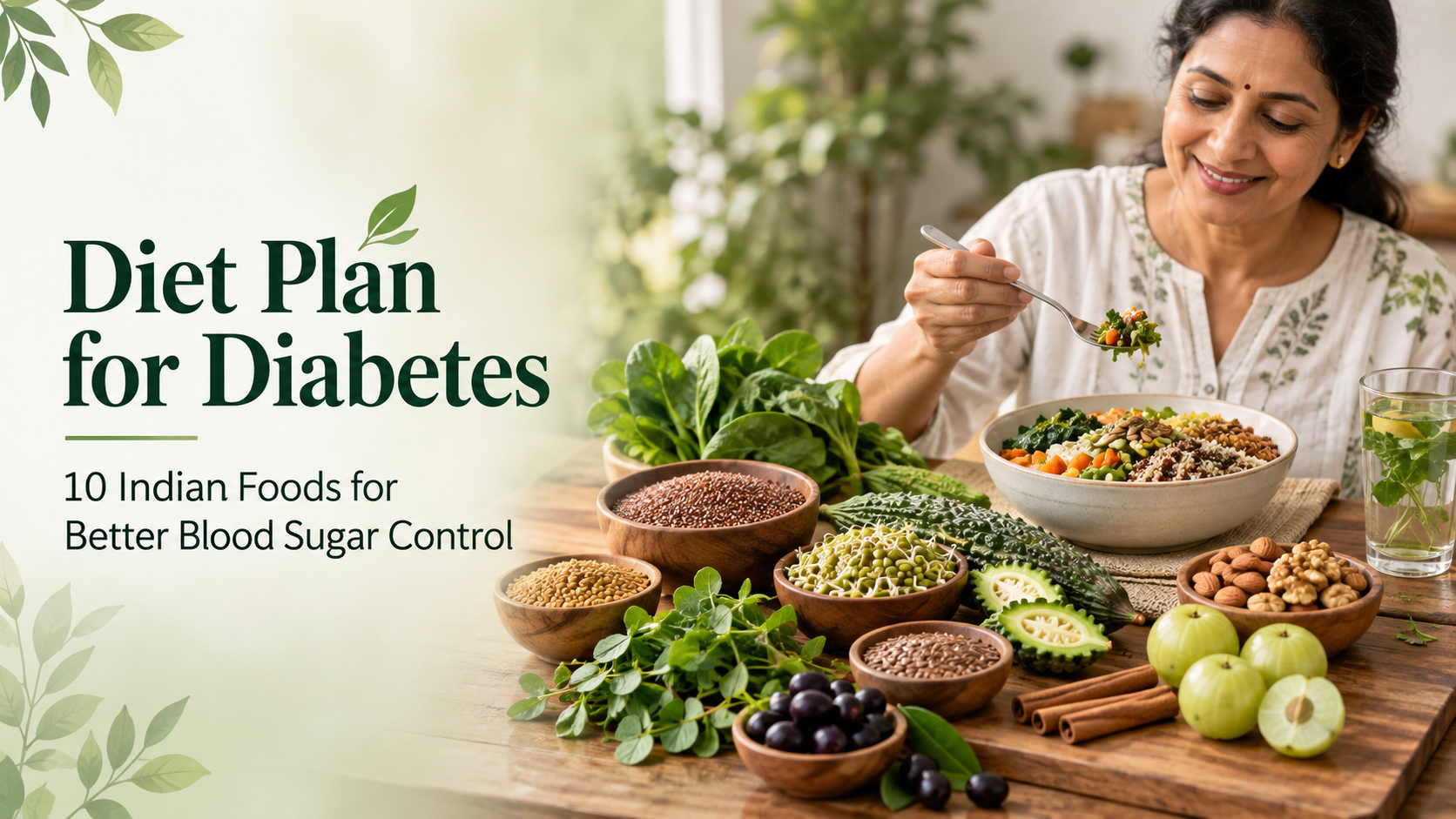
 September 18, 2026
 by
by Table of Contents
- What Makes a Good Diet Plan for Diabetes
- 10 Indian Foods to Build Your Diet Plan for Diabetes Around
- A Sample One Day Diet Plan for Diabetes
- Foods to Remove From Your Diet Plan for Diabetes
- Why a Supervised Diet Plan for Diabetes Works Better
- Frequently Asked Questions
Ask ten people with diabetes what they should eat and you will get ten different answers, most of them contradictory and several of them actively unhelpful. Give up rice completely. Never eat fruit. Switch to sugar free biscuits. Eat only wheat. The confusion is understandable, because most diabetes dietary advice in India is either imported from Western contexts or reduced to a list of prohibitions with no practical structure behind it.
A genuinely effective diet plan for diabetes is not primarily about restriction. It is about choosing foods that slow glucose absorption, improve insulin sensitivity, reduce inflammation, and feed the gut bacteria that support metabolic health. When those things happen, blood sugar comes down as a natural consequence rather than through constant willpower.
This guide covers ten Indian foods that genuinely belong in a diet plan for diabetes, a practical one day structure, and what to remove. It reflects the dietary principles used in the doctor supervised programmes at Nirvana Naturopathy Ayurveda Hospital and Retreat, where guests routinely see fasting glucose fall within the first few days of a corrected diet.
What Makes a Good Diet Plan for Diabetes
Four principles separate a diet plan for diabetes that works from one that merely restricts. First, glycaemic load matters more than glycaemic index, because portion size and what a food is eaten with change its effect entirely. Second, fibre is the single most important variable, since soluble fibre slows glucose absorption and feeds beneficial gut bacteria. Third, meal timing and sequence matter, and eating vegetables and protein before carbohydrate meaningfully blunts the post meal glucose spike. Fourth, an anti inflammatory diet improves insulin sensitivity independently of carbohydrate content.
The World Health Organization identifies dietary modification as a cornerstone of type 2 diabetes management alongside physical activity. The question is not whether diet works, it is whether the plan is specific and practical enough to follow.
10 Indian Foods to Build Your Diet Plan for Diabetes Around
1. Methi (Fenugreek) Seeds
Among the most well studied foods for blood sugar in the Indian diet. Methi seeds are rich in soluble fibre and a compound called 4 hydroxyisoleucine which supports insulin secretion. Soaked overnight and taken on an empty stomach, or powdered into flour, methi belongs in almost every diet plan for diabetes.
2. Karela (Bitter Gourd)
Karela contains charantin and polypeptide p, compounds with genuine glucose lowering activity. Taken as juice on an empty stomach or cooked as a vegetable, karela is one of the most reliable additions to a diet plan for diabetes. The bitterness is not incidental. Bitter foods stimulate digestive and pancreatic function.
3. Jamun and Its Seed Powder
Jamun has been used in Indian traditional medicine for diabetes for centuries, and the seed powder in particular is valued for its effect on glucose metabolism. Seasonal fruit plus year round access to the seed powder makes this a practical inclusion.
4. Whole Millets: Ragi, Bajra, Jowar
Millets deserve their place at the centre of an Indian diet plan for diabetes. They carry substantially more fibre and a lower glycaemic load than polished rice or refined wheat, and they release glucose slowly. Replacing even one refined grain meal a day with millet produces a measurable difference for most people.
5. Sprouted Legumes
Moong, chana, and other sprouted legumes combine protein and fibre in a way that meaningfully slows glucose release. Sprouting increases nutrient availability and makes them easier to digest. A bowl of sprouts as a mid morning inclusion is one of the simplest improvements to any diet plan for diabetes.
6. Amla (Indian Gooseberry)
Extremely high in vitamin C and chromium, amla supports insulin sensitivity and provides antioxidant protection against the oxidative damage that accompanies elevated blood sugar. Taken as fresh fruit, juice, or powder, it is inexpensive and effective.
7. Dalchini (Cinnamon)
Cinnamon has been shown in multiple studies to improve insulin sensitivity and modestly reduce fasting glucose. It is easy to include, works well in herbal kadha or sprinkled over food, and carries no downside for most people.
8. Leafy Greens: Palak, Methi Leaves, Moringa
Very low in carbohydrate, very high in magnesium, and magnesium deficiency is strongly associated with insulin resistance. Moringa in particular has drawn research attention for its effect on blood glucose. Leafy greens should occupy a substantial share of every plate in a diet plan for diabetes.
9. Flaxseed
A concentrated source of soluble fibre and omega 3 fatty acids, flaxseed slows gastric emptying and reduces post meal glucose spikes while supporting the anti inflammatory environment that improves insulin function. Ground rather than whole is essential for absorption.
10. Nuts in Controlled Portions
Almonds, walnuts, and pistachios provide healthy fats, protein, and fibre that blunt glucose response when eaten alongside carbohydrate. Portion control matters, and a small handful is the right quantity. Eaten before a meal, nuts measurably reduce the glucose spike from that meal.
A Sample One Day Diet Plan for Diabetes
Early morning: soaked methi seeds with warm water, or fresh karela juice. On waking, before anything else.
Breakfast: a bowl of sprouted moong with tomato, cucumber, and lemon, or a ragi based preparation. Add a small handful of almonds. Avoid fruit juice entirely, and take whole fruit instead if included.
Mid morning: one seasonal fruit, ideally guava, jamun, or apple, or a glass of amla water.
Lunch: begin with a raw salad, follow with a large portion of cooked vegetables and dal, then a small portion of millet roti or brown rice. This sequence matters as much as the content. Vegetables and protein first, carbohydrate last.
Evening: herbal kadha with cinnamon, or buttermilk. A short walk of fifteen to twenty minutes after this is more valuable than most people expect.
Dinner: early, ideally before seven thirty, and light. Vegetable soup with a small portion of cooked vegetables and one millet roti. Late heavy dinners are among the most common reasons for high fasting glucose the following morning.
Foods to Remove From Your Diet Plan for Diabetes
The removals matter as much as the additions. Polished white rice and refined wheat flour raise glucose sharply. Sugar in all its forms, including honey and jaggery, which are not meaningfully better for blood sugar despite their reputation. Fruit juices, even fresh and unsweetened, because they deliver fructose without the fibre that moderates it. Packaged snacks, biscuits, and bakery items. Fried food, which drives the inflammation that worsens insulin resistance. And so called sugar free products, many of which contain refined flour and starch that raise glucose regardless of the label.
Why a Supervised Diet Plan for Diabetes Works Better
Everything above is accurate and useful, and most people still struggle to implement it consistently at home. The reasons are practical rather than motivational: family meals are cooked differently, work schedules disrupt timing, and there is no daily feedback showing whether it is working.
In a residential setting the entire environment supports the plan. Meals are prepared to a doctor prescribed specification, timing is structured, portions are controlled, and blood sugar is measured daily so the effect of the diet is visible in real numbers rather than guessed at. This is why guests on our diet therapy programme frequently see fasting glucose fall by twenty to fifty milligrams per decilitre within a single week, and leave understanding exactly which changes produced that result.
The purpose is not to keep you in a controlled environment permanently. It is to reset your metabolism, demonstrate what actually works for your body, and send you home with a plan built around your own measured response rather than a generic handout.
Get a Diet Plan Built Around Your Numbers
Generic diet advice only takes you so far. Our doctors design each diet plan for diabetes around your current HbA1c, fasting glucose, medication, weight, and food preferences, then track your response daily. Contact us for a free pre admission consultation.
Frequently Asked Questions
Can a diabetic eat rice every day?
Polished white rice daily is difficult to reconcile with good glucose control, but rice does not have to be eliminated entirely. Switching to hand pounded or brown rice, reducing the portion, eating it last in the meal after vegetables and dal, and pairing it with plenty of fibre all reduce its glucose impact substantially. For many people, replacing rice with millets at one or two meals a day is the more practical change.
Which fruit is best for diabetes patients?
Guava, jamun, apple, pear, papaya, and berries are the best choices because of their fibre content and moderate glycaemic load. Fruit should be eaten whole rather than juiced, and ideally as a standalone mid morning inclusion rather than immediately after a meal. Mango, banana, chikoo, and grapes are higher in sugar and are best limited rather than banned outright.
What should a diabetic eat for breakfast in India?
Sprouted moong salad, ragi or millet based preparations, vegetable stuffed millet roti, or a moong dal chilla with plenty of vegetables all work well. What to avoid is the common Indian breakfast pattern of refined flour with sugar and tea, which produces a sharp glucose spike that sets the tone for the entire day.
How quickly can diet lower blood sugar?
Faster than most people expect. Fasting glucose commonly begins falling within three to five days of a properly structured diet plan for diabetes, and post meal readings improve almost immediately. HbA1c reflects average glucose over roughly three months, so that number moves more slowly even though the underlying improvement starts right away.
Is a diet plan for diabetes enough without medication?
For many people with prediabetes and early type 2 diabetes, sustained dietary and lifestyle change alone can normalise blood sugar. For people with long standing diabetes or higher HbA1c, diet substantially reduces medication requirement but usually does not eliminate it immediately. Any change to your medication should be made by your doctor based on your monitored readings, never independently