MAKE A RESERVATION

 Blog
Blog 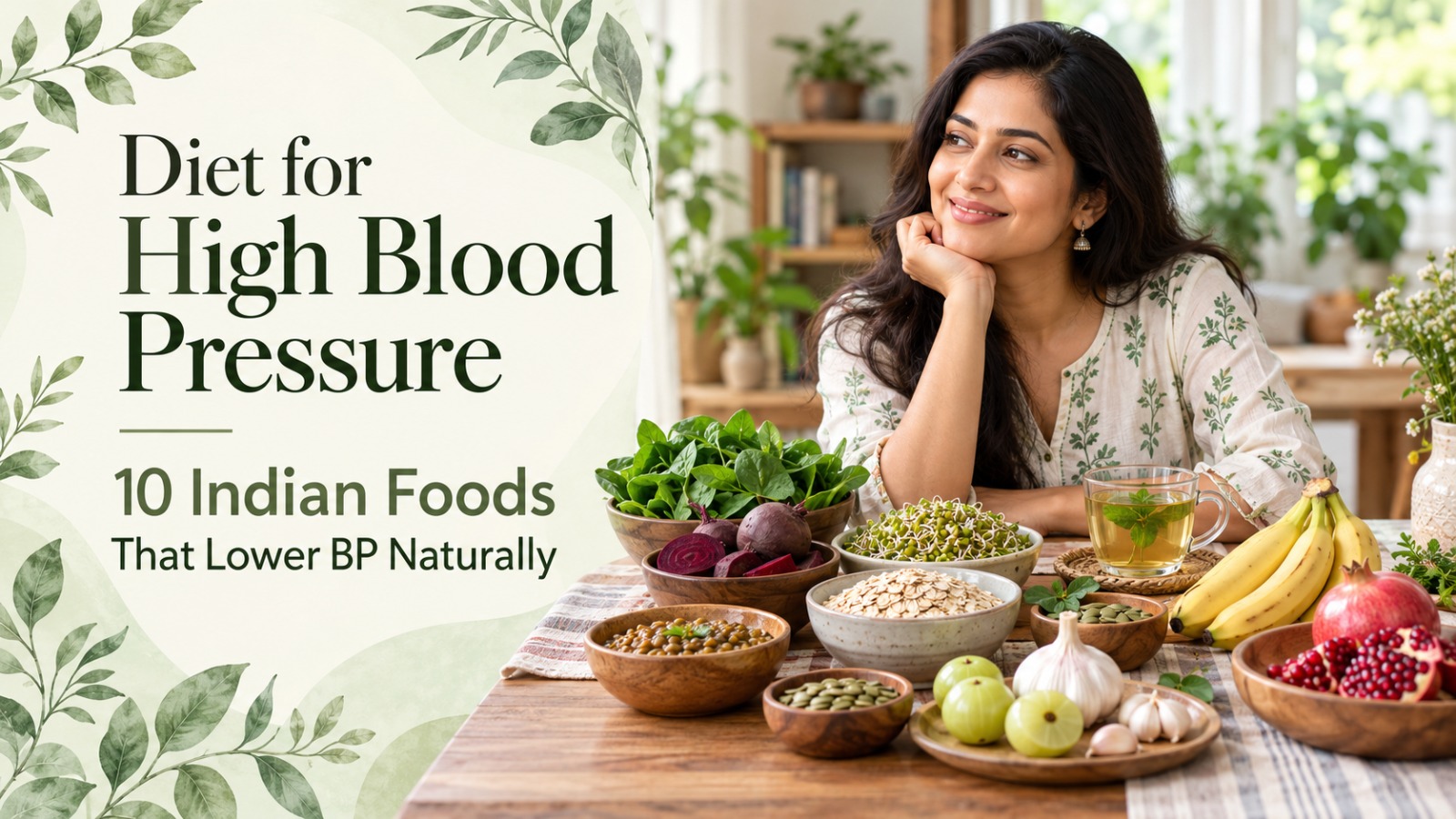
 October 12, 2026
 by
by Table of Contents
- What Makes an Effective Diet for High Blood Pressure
- 10 Indian Foods to Build Your Diet for High Blood Pressure Around
- A Sample One Day Diet for High Blood Pressure
- Hidden Sodium: What to Remove From Your Diet
- Why Supervised Diet Change Produces Faster Results
- Frequently Asked Questions
When someone is diagnosed with high blood pressure, the dietary advice they receive is usually a single sentence: reduce your salt. It is correct as far as it goes, and it leaves out almost everything that actually matters. Most people respond by removing the salt shaker from the table while continuing to eat pickles, papad, packaged snacks, bakery items, and restaurant food that together contribute far more sodium than they ever added by hand.
An effective diet for high blood pressure involves considerably more than salt reduction. It means raising potassium, magnesium, and calcium intake, increasing nitrate rich vegetables that dilate blood vessels, reducing the refined carbohydrate that drives insulin resistance, and eliminating the processed foods that carry both hidden sodium and inflammatory oils.
The American Heart Association has long identified dietary pattern as central to blood pressure control. This guide translates that into an Indian kitchen, using the same dietary principles applied in the residential programmes at Nirvana Naturopathy Ayurveda Hospital and Retreat, where guests frequently see readings drop by ten to twenty five millimetres of mercury within a week.
What Makes an Effective Diet for High Blood Pressure
Four principles matter. First, the sodium to potassium ratio matters more than sodium alone, because potassium actively counteracts sodium at the level of the kidney. Raising potassium while lowering sodium produces a compounding benefit.
Second, dietary nitrates found in beetroot and leafy greens convert to nitric oxide in the body, which dilates blood vessels directly and measurably. Third, magnesium and calcium both contribute to vascular smooth muscle relaxation and are commonly under consumed.
Fourth, an anti inflammatory pattern low in refined carbohydrate improves insulin sensitivity, and since insulin resistance independently raises blood pressure, this matters more than most blood pressure diets acknowledge.
10 Indian Foods to Build Your Diet for High Blood Pressure Around
1. Beetroot
Among the most evidence backed single foods for blood pressure. Beetroot is exceptionally high in dietary nitrates which convert to nitric oxide, dilating blood vessels. Studies have found measurable reductions within hours of consumption. Include it raw in salad, as juice, or lightly cooked, ideally daily.
2. Coconut Water
One of the richest natural sources of potassium available in India, and readily accessible. It supports the sodium potassium balance central to any diet for high blood pressure. One glass daily is a simple and effective inclusion, though people with kidney disease should check with their doctor first.
3. Spinach and Other Leafy Greens
High in potassium, magnesium, and nitrates simultaneously, which makes leafy greens one of the most efficient inclusions available. Palak, methi leaves, moringa, and amaranth all qualify. These should occupy a substantial portion of every plate.
4. Garlic
Allicin, the active compound in garlic, promotes vasodilation and has been shown in multiple studies to produce modest but real blood pressure reduction. It is most effective raw or lightly cooked, since prolonged heat degrades the active compound. Crushing it and letting it stand for ten minutes before use increases allicin formation.
5. Flaxseed
Rich in omega 3, lignans, and fibre, flaxseed has been studied specifically for blood pressure with encouraging results. Ground rather than whole, one to two tablespoons daily, added to food rather than cooked at high heat.
6. Banana
A convenient, inexpensive source of potassium that fits easily into daily eating. One or two daily supports the potassium side of the sodium potassium balance. Again, people with kidney impairment need medical guidance on potassium intake.
7. Amla
High in vitamin C and antioxidants, amla supports endothelial function, meaning the ability of blood vessel walls to relax appropriately. It also has supporting evidence for lipid benefits, which matters since hypertension and dyslipidaemia so often occur together.
8. Whole Millets: Ragi, Bajra, Jowar
Replacing refined grains with millets reduces the glycaemic load that drives insulin resistance, and delivers magnesium alongside. Ragi in particular is notably high in calcium, which contributes to vascular relaxation. This single substitution addresses several mechanisms at once.
9. Hibiscus Tea
Hibiscus has been studied specifically for hypertension, with several trials showing meaningful systolic reduction with regular consumption. Two cups daily is the quantity typically used in research. It is caffeine free, which is an additional advantage in any diet for high blood pressure.
10. Watermelon
Contains citrulline, an amino acid that the body converts to arginine and then to nitric oxide, supporting vasodilation. It is also hydrating and high in potassium. Seasonal, but worth prioritising when available.
A Sample One Day Diet for High Blood Pressure
Early morning: warm water with lemon, or a small glass of amla juice. Followed by two cloves of crushed raw garlic if tolerated.
Breakfast: a vegetable and sprout salad with beetroot, cucumber, tomato, and lemon, plus a ragi based preparation. Add a tablespoon of ground flaxseed. No added salt.
Mid morning: coconut water, or one banana.
Lunch: raw salad first, followed by a large portion of leafy greens and cooked vegetables, dal without added salt, and one or two millet rotis. Season with lemon, herbs, and mild spices rather than salt.
Evening: hibiscus tea, or a herbal kadha. Followed by a fifteen to twenty minute walk, which does as much for blood pressure as most single foods.
Dinner: early, before seven thirty, and light. Vegetable soup with cooked greens and one millet roti. Late heavy dinners disrupt sleep, and poor sleep raises next day blood pressure.
Hidden Sodium: What to Remove From Your Diet
This is where most people’s diet for high blood pressure quietly fails. The salt shaker accounts for a minority of daily sodium intake. The real sources are pickles and papad, namkeen and packaged snacks, bakery products including bread and biscuits, packaged and instant foods, restaurant and takeaway food, processed cheese and sauces, and baking soda used in cooking.
Beyond sodium, remove refined flour and sugar, which drive insulin resistance and therefore blood pressure. Remove fried food and reheated oils, which promote arterial inflammation. Reduce or eliminate alcohol, which raises blood pressure directly and reduces medication effectiveness. And moderate caffeine, particularly if you are sensitive to it.
Reading labels is genuinely useful here. Many products marketed as healthy carry surprisingly high sodium content, and a single packaged item can exceed what you saved by removing salt from your cooking.
Why Supervised Diet Change Produces Faster Results
Everything above is accurate, and most people implement perhaps half of it inconsistently. The obstacles are practical. Family food is cooked with salt. Work meals are eaten out. Habits around tea, snacks, and evening food are decades old. And crucially, there is no daily feedback showing whether any of it is working.
In a residential setting all of that changes at once. Meals are prepared according to a doctor prescribed diet therapy, with low sodium specifications, structured portions and timing. Therapies including hydrotherapy and mud therapy support the dietary effect, and blood pressure is measured every morning so the response is visible in numbers rather than assumed.
This is why guests on our programme routinely see a ten to twenty five millimetre of mercury systolic reduction within seven days, and leave understanding precisely which changes produced it, with a home protocol built around their own measured response.
Frequently Asked Questions
Which food reduces blood pressure immediately?
Beetroot has the most immediate documented effect, with studies showing measurable reduction within one to three hours of consumption due to its nitrate content converting to nitric oxide. Coconut water and other potassium rich foods act somewhat more gradually. That said, no single food substitutes for the overall dietary pattern, which is what determines your baseline.
How much salt is allowed per day in high blood pressure?
General guidance is under five grams of salt daily, roughly one teaspoon, and under three and a half grams for people with established hypertension. Most Indians consume close to double this. Since the majority comes from processed and restaurant food rather than home cooking, removing those sources usually achieves more than carefully measuring salt at the stove.
Can I eat rice with high blood pressure?
Rice itself is low in sodium and not a direct blood pressure concern. The issue is that polished white rice in large portions raises insulin, and insulin resistance independently raises blood pressure. Reducing the portion, switching to hand pounded or brown rice, or replacing it with millets at some meals is the sensible approach rather than complete elimination.
Is coconut water good for high blood pressure?
Yes, for most people. Coconut water is among the richest natural potassium sources available and supports the sodium potassium balance central to blood pressure control. One glass daily is a reasonable inclusion. People with chronic kidney disease should check with their doctor first, since impaired potassium handling makes high potassium intake risky.
How quickly can diet lower blood pressure?
Faster than most people expect. Significant sodium reduction produces measurable change within seventy two hours. Adding potassium and nitrate rich foods contributes within days. Most guests on our residential programme see a clear reduction within the first week. Weight related improvements accumulate more gradually over subsequent weeks and months.
Get a Diet Built Around Your Readings
Generic dietary advice only takes you so far. Our doctors design each diet for high blood pressure around your current readings, your medications, your kidney function, and your food preferences, then measure the response daily. Contact us for a free pre admission consultation.